Analyse topologique et modélisation de systèmes dynamiques
ATOMOSYD is an acronym to designate the approach we develop to investigate dynamical systems. We are concerned by the topological analysis, that is, a global approach of the phase portrait, and global modelling which corresponds to the possibility to obtain a set of differential equations from measurements.
This web site is devoted to any features related to the nonlinear dynamical systems theory. Of course, our research activities can be found in section Research activity but other topics are also considered as
Dynamical systems
Algorithms for investigating data
Data sets useful for applying new tools
We are working for leaving this web site alive. If you have any remark, please, tell us
News
Copyrighted by Hugues Aroux
A recent publication
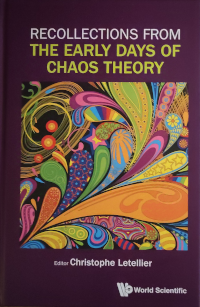
Recollections from the Early Days of Chaos Theory (2026)
Edited by : Christophe Letellier
This book traces how key figures came to study chaos theory during the 1970s and 1980s, offering a collection of personal accounts that reveal the lesser-known stories behind a scientific revolution. Contributors were invited to share how they first encountered chaos, who introduced them to it, and what drew them to this then-unconventional field. They were encouraged to reference the works that shaped their journeys, providing insight into the often-surprising paths that led to major discoveries.
Published by World Scientific Publishing in January 2026 Online
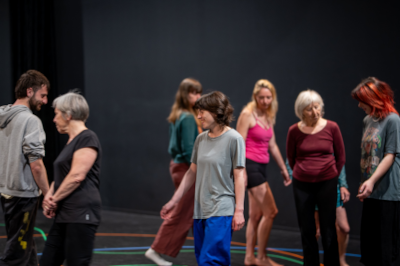
Dans le cadre de la 9e édition du concours Danse Élargie, en réponse à l’invitation de la compagnie Terrain-Boris Charmatz, je puiserai dans les thématiques et les matériaux chorégraphiques de ma prochaine pièce, La croissance exponentielle des petites erreurs pour explorer les dynamiques chaotiques à travers un atelier participatif intitulé Disco Chaos.
Les artistes Peggy Grelat, Elena Lecoq et Boris Charrion qui m’accompagnent dans cette création, prendront également part à la danse et inviteront le public à rejoindre un grand mouvement collectif, traversé par l’énergie du groupe, la circulation des corps et la création de plusieurs foyers chorégraphiques en mouvement. Après un échauffement guidé et la transmission d’un matériau chorégraphique simple, les participants sont répartis en différents groupes pour faire émerger, sur la place du Châtelet, une danse massive, libre et joyeusement chaotique.


 Dynamical systems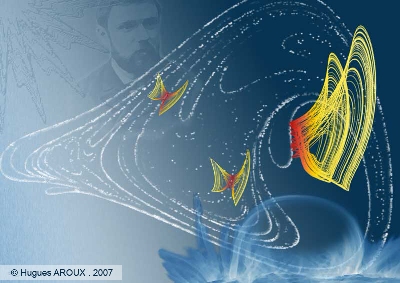

 |
|
 |
MàJ . 30/07/2026
|
MàJ . 30/07/2026